When Kate contacted Oasis Tree Management about the mature Leopard Tree in her backyard at Lota Brisbane, it was obvious how much the tree meant to her.
The large tree provided welcome shade across the yard and was a favourite habitat for local birds and possums. Having previously been professionally pruned, it had responded well and remained one of the property's defining features.
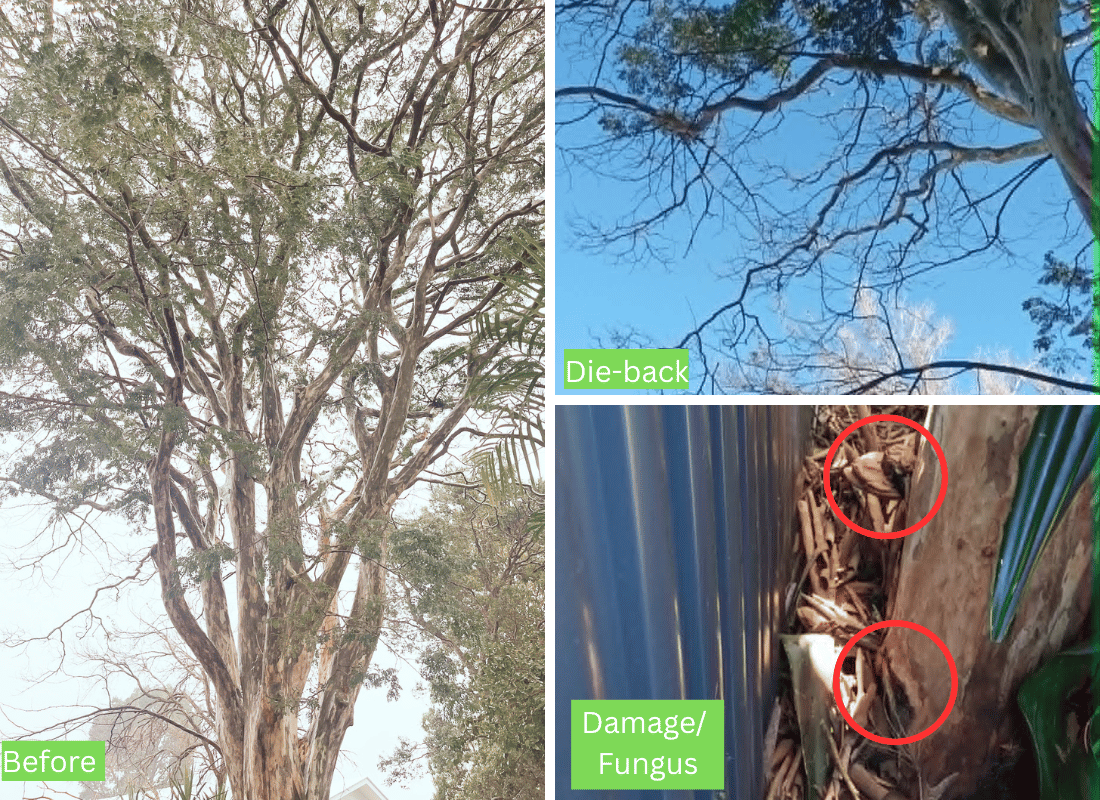
Recently, however, Kate had noticed several large limbs on one side of the canopy had died back, while the remainder of the tree appeared healthy and vigorous. She was also concerned about damage to the base of the trunk that had occurred during the installation of a new Colourbond fence and wanted to know whether the two issues were connected.
Rather than removing a tree she loved, Kate wanted honest advice about its condition and the best way forward.
Following a Visual Tree Assessment (VTA), our qualified Arborists inspected both the canopy and the structural root zone.
The investigation identified that a structural root had been severed during the fence installation. While this damage had occurred some time earlier, cutting a root creates a large wound that can allow disease to enter the tree.
On the trunk, we identified a bracket fungus (fungal fruiting body), confirming that decay had become established within the tree.
The canopy decline directly corresponded with the damaged side of the root system, while the remainder of the tree continued to display good health.The assessment confirmed that the root damage had likely initiated the decay process, resulting in the dieback visible within one section of the canopy.
Bracket fungi are among the most significant indicators of internal decay in trees.
The visible mushroom-like fruiting body is only a small part of the fungus. The majority of the organism exists within the timber, gradually breaking down the wood over many years.
Once a bracket fungus becomes established, the decay cannot be reversed.However, that doesn't necessarily mean the tree requires immediate removal.
Many hardwood species, including Leopard Trees (Libidibia ferrea), are exceptionally strong and can continue to live safely for many years when the decay is carefully assessed, monitored and managed by a qualified arborist.
The key is understanding how much sound wood remains, reducing unnecessary loading on compromised sections of the tree, and inspecting the
tree regularly for changes over time.
Because Kate was passionate about retaining the tree if it could be done, immediate removal was not our first recommendation.Instead, we developed a management plan aimed at extending the tree's safe life while reducing risk. Our arborists:
While the fungal decay cannot be stopped, careful pruning can reduce mechanical stress on weakened areas and allow the tree to remain both safer and more enjoyable for as long as practical.
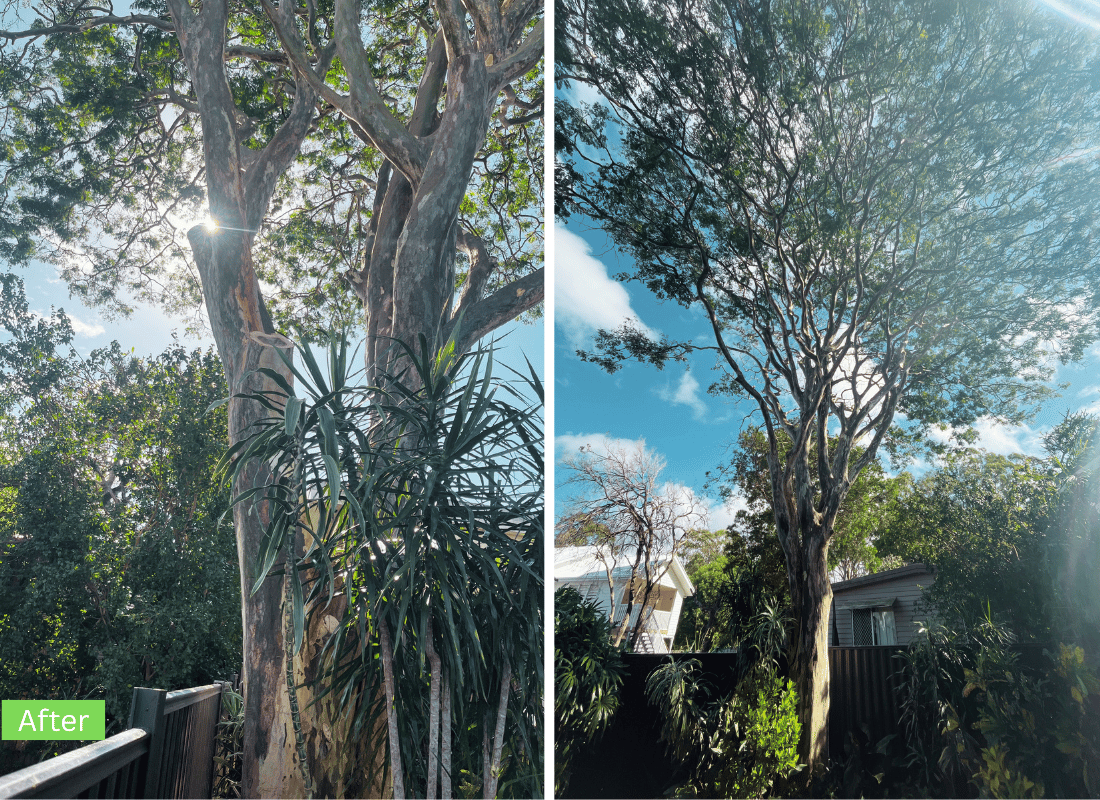
The transformation was immediate. Removing the deadwood and rebalancing the canopy restored the appearance of the Leopard Tree while
allowing more light and airflow throughout the crown.
Most importantly, the work provided Kate with confidence that her treasured tree could continue to be enjoyed while being responsibly managed.
Following completion of the project, she sent us this wonderful feedback:
"The leopard tree is magnificent (the tree seems so much happier, like it can breathe) and even the neighbours have commented on the great job the team did."
"The team were professional and organised from the beginning of the job to the end, the yard was left spotless, all debris removed... Really hoping for the best long-term outcome for the tree. Are you able to please schedule us in for a follow-up in 12 months?"
This project perfectly reflects our approach to arboriculture. Not every tree showing signs of decay needs to be removed immediately. Where it is appropriate to do so, we work with our clients to preserve mature trees through informed management, ongoing monitoring and practical arboricultural solutions.
For Kate, that meant she could continue enjoying the shade, wildlife and beauty of a tree she loved, while knowing it would be professionally monitored as its condition evolves.
Every tree is a living organism that responds differently to its environment, weather, pests, disease and natural ageing. While a professional assessment allows us to make informed recommendations based on the tree's current condition, structure and health at the time of inspection, no arborist can guarantee how long a tree will live or whether management practices will extend its lifespan.
Our role is to provide practical, evidence-based management options that balance tree preservation with public safety. Through regular inspections and ongoing monitoring, we can assess how a tree is responding over time, identify any changes in condition, and adjust our recommendations as required.
In the case of this Leopard Tree, our goal is to preserve a much-loved feature of the property for as long as it remains appropriate and safe to do so, while continuing to monitor its condition and manage any evolving risks.
If your tree has suffered construction damage, is showing signs of decline, or you've noticed fungal growth around the base, don't assume removal is the only solution.
At Oasis Tree Management, we believe every tree deserves a professional assessment before that decision is made. Where possible, we'll recommend practical management strategies that prioritise both safety and tree preservation.
Contact us today to arrange a professional tree assessment anywhere across Brisbane Southside, Logan, Redlands and surrounding areas. 07 5546 3958